
Ⅰ. The Essence and Origin of Feng Shui
Feng Shui is not metaphysics, but a traditional discipline integrating environmental science and geomancy (known as Kan Yu in ancient Chinese) , with its core concept centered on “Qi (vital energy)” . The term “Feng Shui” (wind and water) derives from the movement of Qi: Qi’s flow generates wind, and wind originates from the convergence of hot and cold air over land and oceans — essentially, “Qi comes from water,” hence the name “Feng Shui” .
Though there are over ten schools of Feng Shui, all share the core of “Qi balance,” focusing on adjusting the environment to align Qi with human needs.

Ⅱ. How Does Feng Shui Affect People?
Both the human body and the surrounding environment have flowing Qi, and their alignment directly impacts life status, mainly reflected in two aspects:
1. Quantity of Qi Flow Influences Health and Decisions
The Qi in the human body needs to renew approximately 50 times daily — too little causes “Qi stagnation” (e.g., stuffy rooms with air conditioning and closed windows lead to dizziness), while too much drains energy (e.g., feeling unwell after a night of strong wind).
The same applies to environmental Qi: overly fast or slow Qi flow in homes/offices first affects physical and mental health, then clouds judgment, potentially leading to wrong decisions and life consequences.
2. Quality of Qi Shapes Regions and People
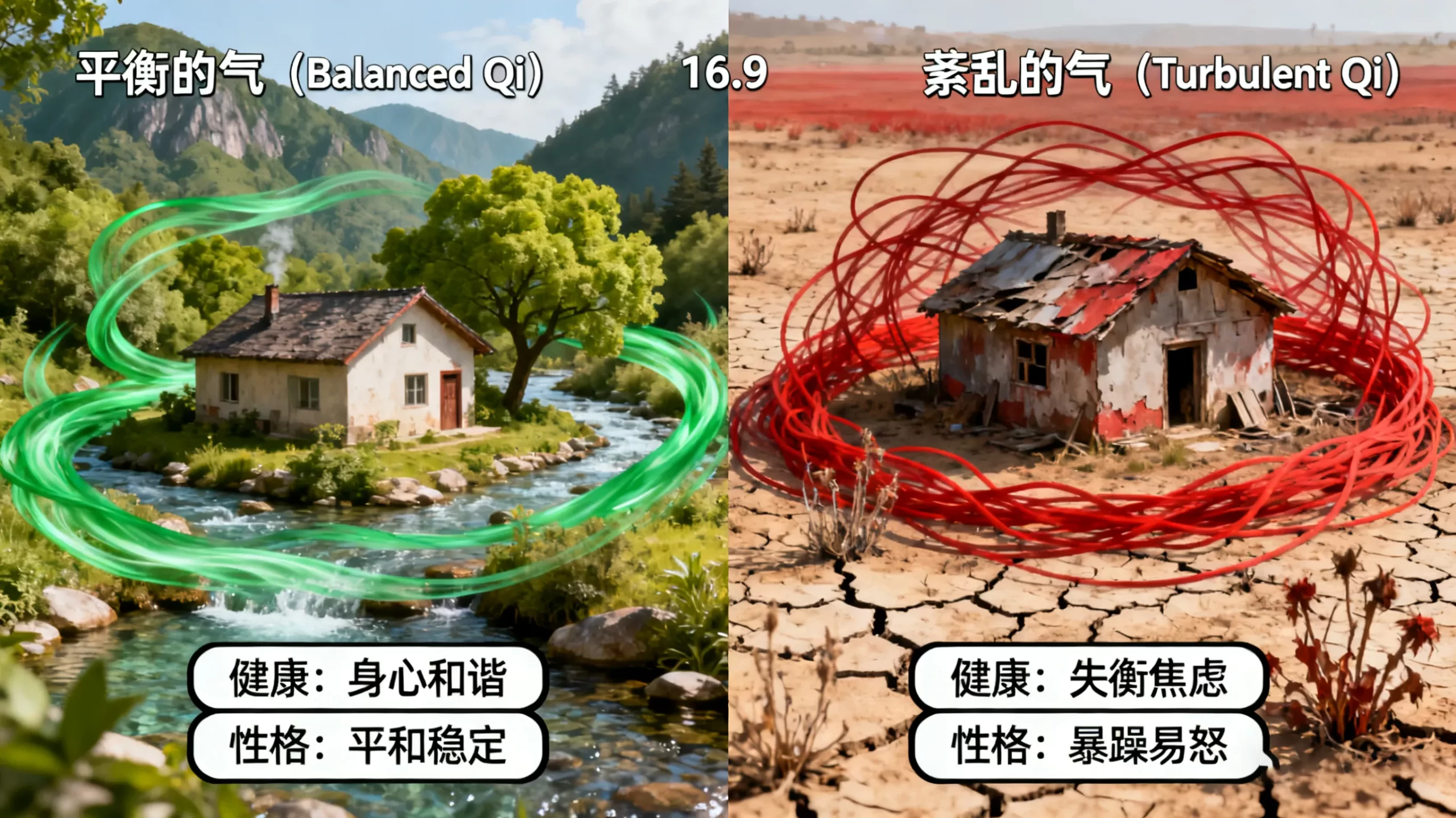
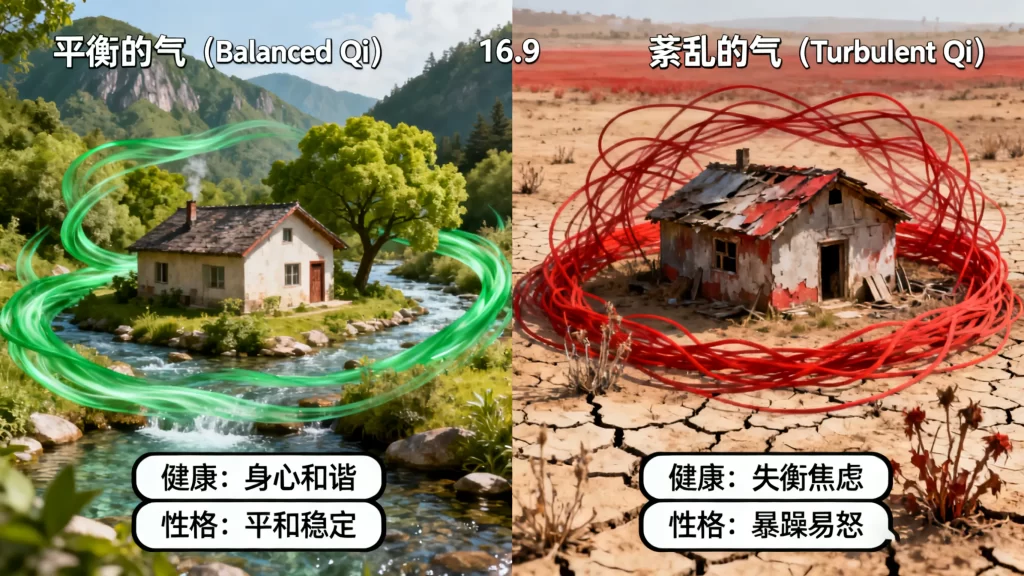
Qi varies by environment, which explains proverbs like “Three miles differ in wind, ten miles differ in customs” and “A place shapes its people” . Livable landscapes (mountains and water) foster gentle Qi, calming people; harsh environments (barren mountains, chaotic waters) create turbulent Qi that indirectly influences temperament — the Feng Shui logic behind the traditional saying “Barren lands breed unruly people” .
Ⅲ. Core Methods to Adjust Feng Shui: Luan Tou and Li Qi
The two key approaches correspond to “spatial layout” and “temporal changes,” and their combination achieves ideal Qi flow :
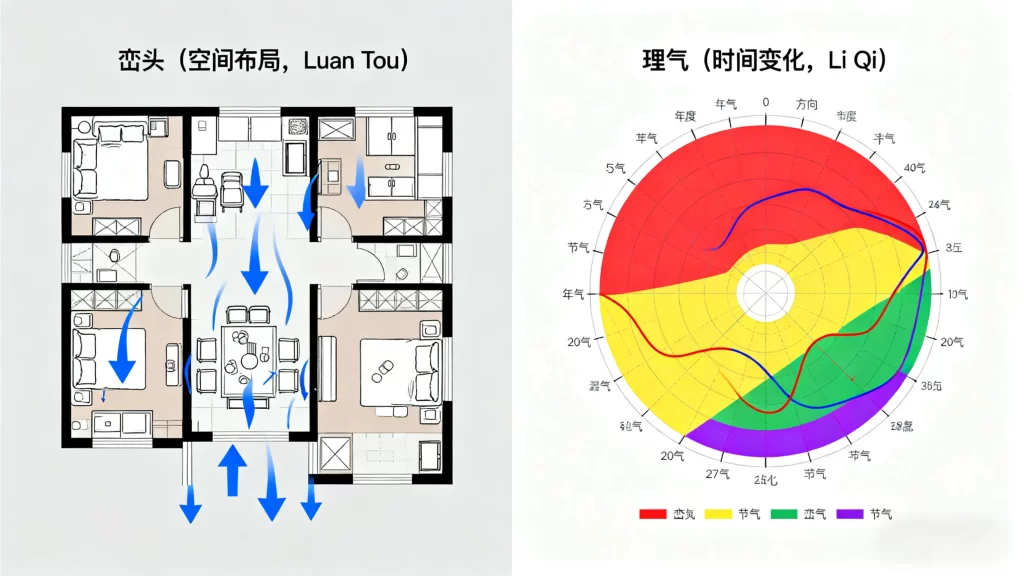
1. Luan Tou: Adjust Spatial Layout to Alter Qi Flow
Luan Tou (Form School) refers to “external physical arrangements” — modifying the spatial position of furniture or buildings to change Qi’s direction and speed . Examples include:
- Walls block airflow (people behind walls avoid wind) — altering Qi direction;
- Opening windows slightly in summer creates faster airflow than fully opening them — the “wind constriction effect” (the smaller the flow area, the faster the airspeed).
The core goal of Luan Tou is to make Qi “linger briefly” indoors, achieving “Hiding Winds and Gathering Qi” and “Yin-Yang balance” — avoiding overly fast loss or stagnation of Qi to match human needs.
2. Li Qi: Align with Temporal Changes for Dynamic Qi
The constant movement of the Earth and celestial bodies causes environmental Qi to change daily and annually — the same space has different “Feng Shui directions” at different times, which is the domain of Li Qi (Compass School) .
A typical example is the saying “Riches do not last three generations”: some old houses bring prosperity to the first occupants, decline to the second, and ruin to the third. This is not due to changed Luan Tou (spatial layout), but altered Li Qi (temporal Qi shifts) making the 气场 incompatible with residents .
Li Qi identifies time-based Qi patterns; for instance, Xuankong Feng Shui is a profound Li Qi discipline focusing on adjusting Feng Shui items with time to avoid Qi imbalance .
Ⅳ. 3 Practical Examples of Feng Shui Improvement
Combining basic Luan Tou and Li Qi logic, these adjustments enhance home Qi effectively:
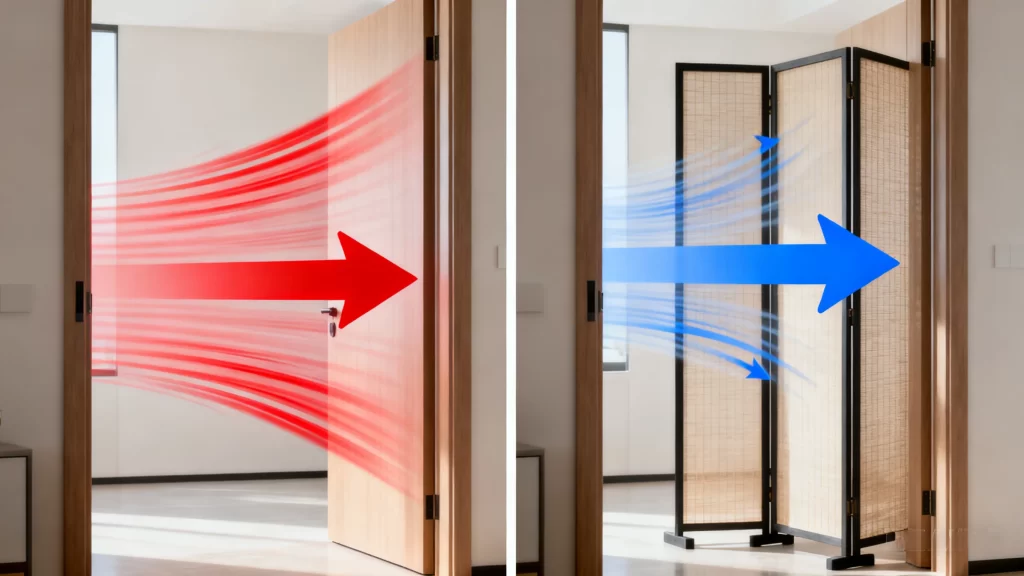
1. Resolve “Through Wind” (Chuan Tang Feng)
If the front door and window are aligned, Qi flows straight out, failing to gather. Placing a screen between them slows airflow, achieving “Hiding Winds and Gathering Qi” .
2. Adjust Bed Position
Many place bed heads against corners (where Qi flows slowest). Long-term sleep here causes “Qi stagnation,” harming health and fortune. Moving the bed to leave space between its side and the wall restores normal Qi flow.
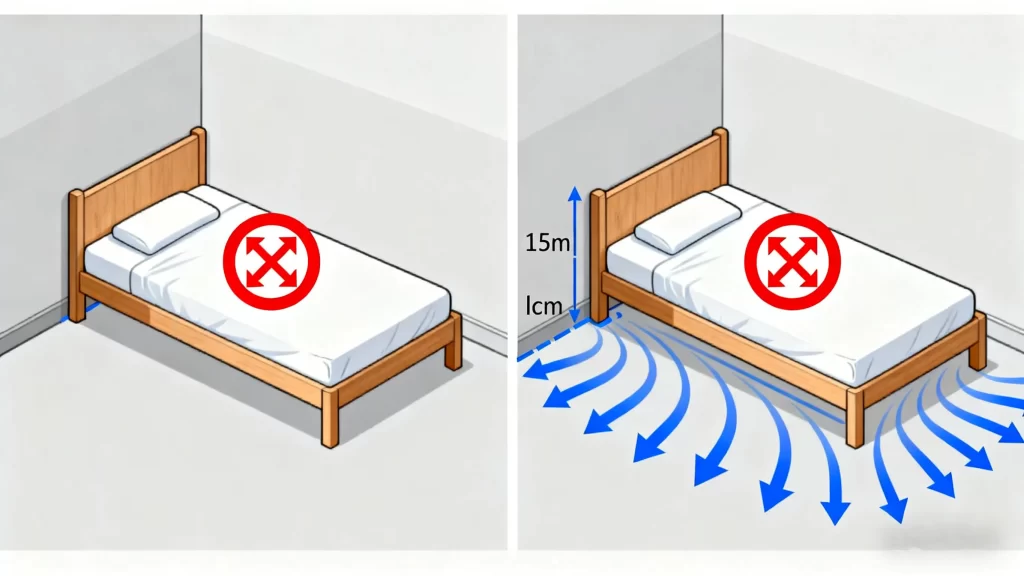
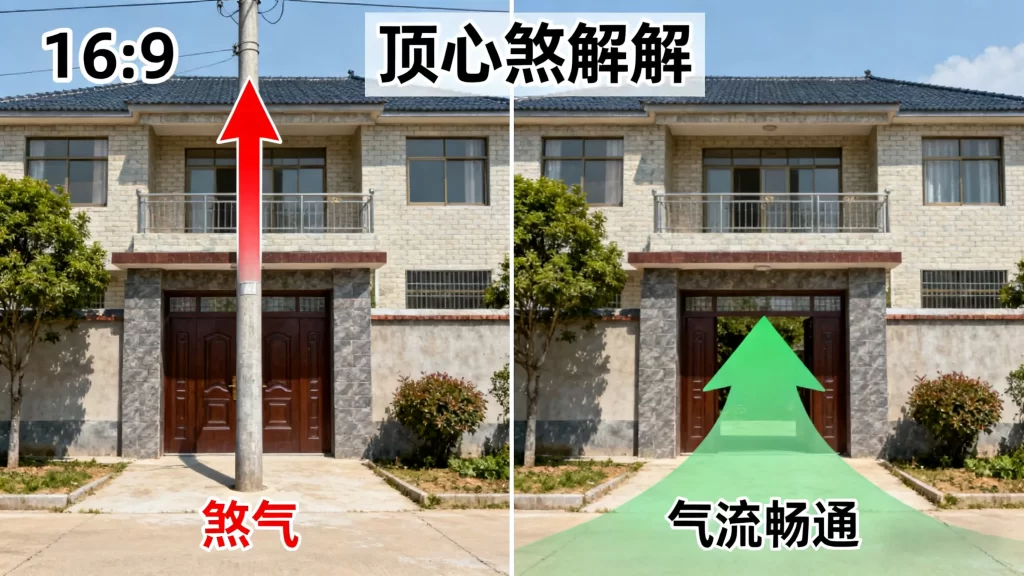
3. Resolve “Ding Xin Sha” (Top Heart Sha)
Doors facing trees, utility poles, or high-voltage towers block Qi and introduce “negative energy” (Sha Qi). Adjusting the door position to avoid direct alignment fixes this.
Conclusion
The core of Feng Shui basics lies in three key points: “Qi balance,” “spatial layout (Luan Tou),” and “temporal changes (Li Qi)” . It is not a mysterious doctrine but a practice of aligning environments with human needs. For beginners, there’s no need to pursue complex theories — start by improving small surroundings to gradually perceive Qi’s connection with daily life.




Comment (1)
Excellent insights; this article helps us understand what Feng Shui is.